नस्ती उठाठेव, इंग्रजीमध्ये
Nasti Uthathev, Ingrazi Mein
Lower Marathi, Higher Pu La
An English-Medium Boy’s Return to Nasti Uthathev

Writing about a Marathi book in Ingrazi is a small act of sacrilege. My defence: somewhere out there is a bilingual reader who has drifted away from Marathi, and this might nudge them back.
Nasti Uthathev (roughly, “a needless fuss”) is an early Pu La Deshpande, published in 1952: three plays and ten short stories. It has neither the glamour of Batatyachi Chal nor the depth of Ti Phulrani. There is no Sakharam Gatne to rival Vyakti ani Valli, none of the quotable lines of Mi ani Mazha Shatrupaksha, none of the poignant journey of Asa Mi Asami. It is a gentle read, easy on the eyes. And that is its value. Reading it is like an archaeological dig into how Pu La became Pu La. The gaze is already there, and so is the mirror.

Pu. La. Deshpande (P. L. Deshpande)
First published 1952
3 plays · 10 short stories
Edition shown: Saket Prakashan
The Barber’s Mirror
Pu La’s sarcasm works like a barber’s hand mirror. The barber does not turn you around or lecture you. He simply holds the mirror behind your head and shows you the side you never see, the side that is nonetheless inseparably yours.
That is the trick. Pu La never points at “those people”. He builds his world out of minute observation: a mannerism, a gait, the shirt someone insists on wearing. His places are never mere wood and stone; they are extensions of the people who live in them. Everything is so familiar that, by the time the absurdity arrives, we have already accepted the world as ours. And if the world is ours, so are its idiocies and prejudices.
He makes us own them first, and only then lets us laugh.
That is sarcasm at its best, and Nasti Uthathev shows it at work.

Whose Lineage Is It Anyway?
One short play holds the mirror up perfectly. A father and son are arguing about the son’s marriage, while a journalist interviews the father for a family profile. Through the interview we learn that the family traces its lineage to some of the greatest generals of the Maratha army, one grandee having fought in the Third Battle of Panipat. The history comes to us through retold battles and through the portraits and relics of that era hanging in the house.
The conflict arrives when the son announces that he wants to marry a girl of his choice, from the lower strata of society. Love aside, he has a practical argument: she earns more than he does, more, in fact, than the whole family. Pu La lets the caste-and-class angle play out and gives both sides their reasons: the father holding on to a legacy, the son looking to the future. The humour lulls us into quietly taking a side, according to our own prejudices.
Then, in the final act, Pu La brings in a Shakespearean element: ghosts. The ancestors in the portraits join the family argument. We expect the debate to end in one of the two available conclusions. Instead, Pu La blows up its very basis. The grandee’s ghost reveals that he was among the unidentified martyrs at Panipat. The man who came home in his place was an impostor. So whose “lineage” are you harping on? And the “you” in that question is you, the reader. The mirror, once again, is behind your head.

A Gallery of Ordinary People
The stories are studies in observation and in the making of characters. Pu La brings his people to life through small details, a limp or an uncanny hairdo, and then dresses them up: the colours of their clothes introduce us to the colours of their speech. Yet these fictional characters rarely live in a fictional reality. Their reality is the one we observe every day.
When a music teacher is forced to indulge the whims of a rich man’s daughter, we understand the economics of talent. It is equally funny, and equally sad, when the same music teacher sells bhel to make ends meet. And the writer in each of us is taken on an empathy trip when Pu La regales us with the dilemma of an aspiring novelist and the arsenal of unfinished novels he keeps.

Making a Katraj
Since this is, in a way, period writing, the book also gives us glimpses of life in early independent India. Nothing profound, just the quirks of the day. From it I learned that Katraj, near Pune, once carried a different meaning.
Today Katraj is a bustling, overcrowded place where two major highways meet. Back then it must have been desolate, and the book uses its name as a byword for foolishness. एखाद्याचा कात्रज करणे (ekhadyacha Katraj karne), to make a Katraj of someone, means to give them the slip, to make a fool of them.
Where does the phrase come from? The popular story ties it to Shivaji Maharaj’s raid on Shaista Khan at Lal Mahal in 1663. As it is usually told, the small Maratha party, pursued on its way back to Sinhagad, tied lit torches to the horns of bulls and set them loose on the Katraj hills. In the dark, the swaying flames looked like an army, and the Mughals were sent chasing lights (or, in some tellings, turned back in fear) while the real riders slipped away to Sinhagad. Whether or not every detail happened just so, the phrase stuck: the Mughals had been made a Katraj of.

A Pune Dictionary · not quite Molesworth
कात्रज करणे
katraj karne, v. phr.
- To give someone the slip; to lead a pursuer the wrong way.
- To make a fool of someone, usually without their noticing until it is too late.
Usage: त्याने आपला चांगलाच कात्रज केला. He made a proper Katraj of us.
Origin: popularly traced to the Katraj hills, 1663, and a herd of bulls with torches on their horns.
Plate IVMaking a Katraj. Torches on horns, and an army that wasn’t there: the popular story behind the phrase.
Lower Marathi
An astute student of Marathi probably knew all this. For an English-medium boy like me, it was news. English-medium schooling, as I like to say, leaves your English at a “medium” level. On the SSC board, the Wildes and Shakespeares were kept well away from us, and as a Crescentian, nobody forced me to speak English at school either.
Marathi, meanwhile, gave us step-motherly treatment. We were taught “Lower” Marathi. Seriously: my SSC exam paper had “Lower Marathi” printed in bold at the top. And no, they did not find a Marathi word for “lower”. They wrote the English word in Devanagari: लोवर.
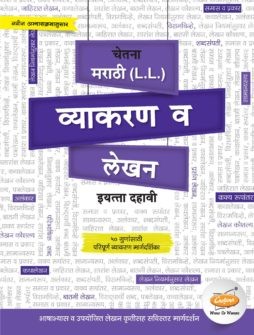
Grammar & Writing, Std. X
State board (SSC), Maharashtra
Exhibit: note the “(L.L.)”
My classmates still believe that Ga Di Madgulkar and William Wordsworth were contemporaries, by virtue of both being poets. Some of these lateral thinkers are now part of the very system that produced them. In some school in Pune, you may well hear a teacher say:
“ते व्हाय नंतर येते ना, तेच ते, Adjective clause बरं का.”
(The thing that comes after “why”, that one, that’s the adjective clause, okay?)
Such gems are the true legacy of our school. And one of those gems now has the audacity to write about a Marathi book in English.

Two Patients, One Prescription
One story in the book stayed with me more than the rest. Pu La sprains his back, and everyone he knows arrives with a cure. Each nuskha (home remedy) comes backed by anecdotal evidence, and each is more absurd than the last.
It felt familiar, and it took me a while to place why. Chi Vi Joshi (Chintaman Vinayak Joshi), the writer a generation before Pu La whose Chimanrao stories had taught middle-class Maharashtra to laugh at itself, had written the same comedy. In Ankhi Chimanrao (आणखी चिमणराव), the affliction is a case of sore eyes rather than a sprained back, but the procession is identical: one well-meaning visitor after another, each with sure-shot wisdom on handling the crisis.
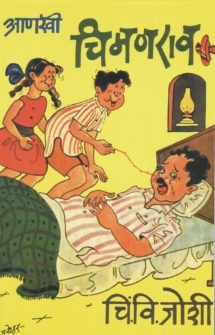
Chi. Vi. Joshi (Chintaman Vinayak Joshi)
More of the Chimanrao household
Affliction on file: sore eyes
Some of you will want to argue over who inspired whom. I will not! I am a patient reader, and I would rather enjoy both stories than turn them into a plagiarism case. What interests me more is what the echo says. The comedy of the Marathi household, where the joke is the family, the neighbours and their advice, was being handed from one writer to the next.

Passing the Baton
So, true to my Crescentian roots, I began by confessing to one sin and committed a second along the way: I sneaked another book into this one. But the two books belong together, and even their dedications tell the story.
Chi Vi Joshi, true to the Maharashtrian family ethos, dedicated his to the memory of his son and granddaughter. A young Purushottam Laxman Deshpande dedicated his to his mother. One looks back at those who came after him; the other looks up to the one who came before. Between the two dedications, the baton changes hands, from Chimanrao’s household to Pu La’s Pune.

And decades later, it reaches an English-medium boy with a Lower Marathi certificate, who picked it up late, read it slowly, and is now, rather sheepishly, passing it on in Ingrazi.
वाचक पत्रिकाBorrower’s Card
| Date | Borrower | Remarks |
|---|---|---|
| Before | Chi. Vi. Joshi | Sore eyes. Handed on the household comedy. |
| 1952 | Pu. La. Deshpande | Sprained back. Dedicated to आई. |
| Later | An English-medium boy (SSC, L.L.) | Returned decades late, in Ingrazi. |
| Today | You | Due whenever you are ready. |
— Vinaay Patil
Read next
← All Movie stories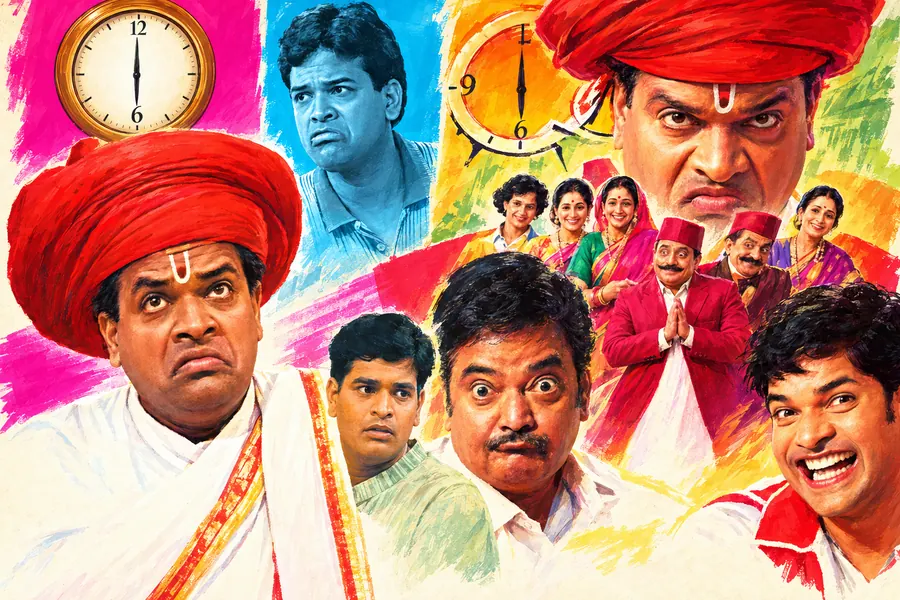 Funny & HappyIngenuity of LimitationsShrimant Damodar Pant: the natak, the movie, and why less is moreIn common: Comedy · Pu La Deshpande · Ghosts7 min read
 Funny & HappyChoricha MamlaWho Is the Real Chor?In common: Comedy · Nostalgia5 min read
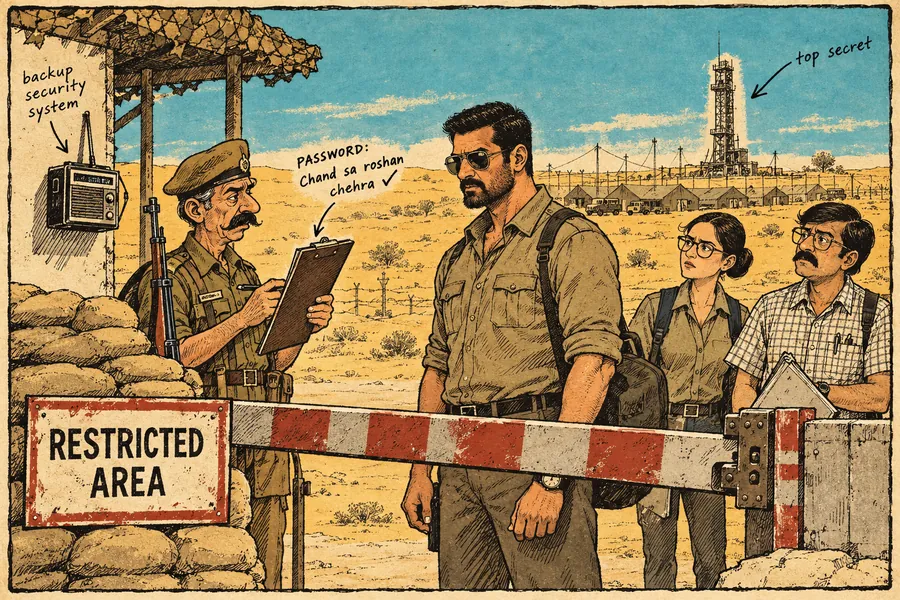 Funny & HappyTo Be or Not to Be: The John Abraham QuestionFrom Madras Cafe to Parmanu, where Antakshari guards a nuclear facilityIn common: Satire · Nostalgia8 min read