Fair Uhan was unlike the rest of the savages. He was not from Valkan; he was a Mixling, a derogatory word for his type. He and his shadow Raksen, his childhood friend, were both Mixlings in Aahush’s army, and with their tenacity, their villainy and their utter abhorrence of the four established clans of Praleesi, they had made something of a name for themselves. Uhan had never led a mission before; unlike his father, he was not a captain. He enjoyed the support and respect of the baguls that his father had earned, but was pestered regularly for his looks. To nab the shrewd master of weapons, Mskar, Uhan took the finest twelve baguls: his shadow Raksen, the eldest Araksha, Ujoy, Kretu, Dhruket, Kryiet, Shiamack, Dhanha, Dhranda, Khetru, Sahatri, and the youngest, Primya.
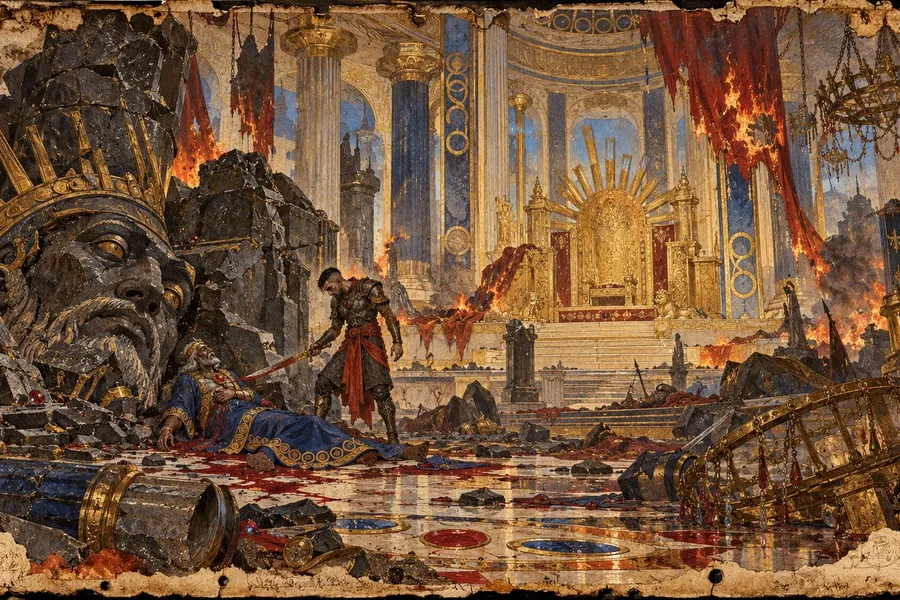
The band of thirteen was all set, with strong horses from Ndra’s stable and new armour from the fallen capital. The baguls took just a few breast and back plates. Armour was for the weak and hindered movement; that was their firm belief. Uhan was of a different opinion. He wore the extremely light hauberk with additional greenish breast and back plates, and made his dear friend Raksen wear it too. Both wondered how light these felt in spite of being metal. Raksen was not one to wear it, but if Uhan ordered, he would; his loyalty to Uhan knew no bounds. Not for nothing did the baguls call Raksen the shadow.
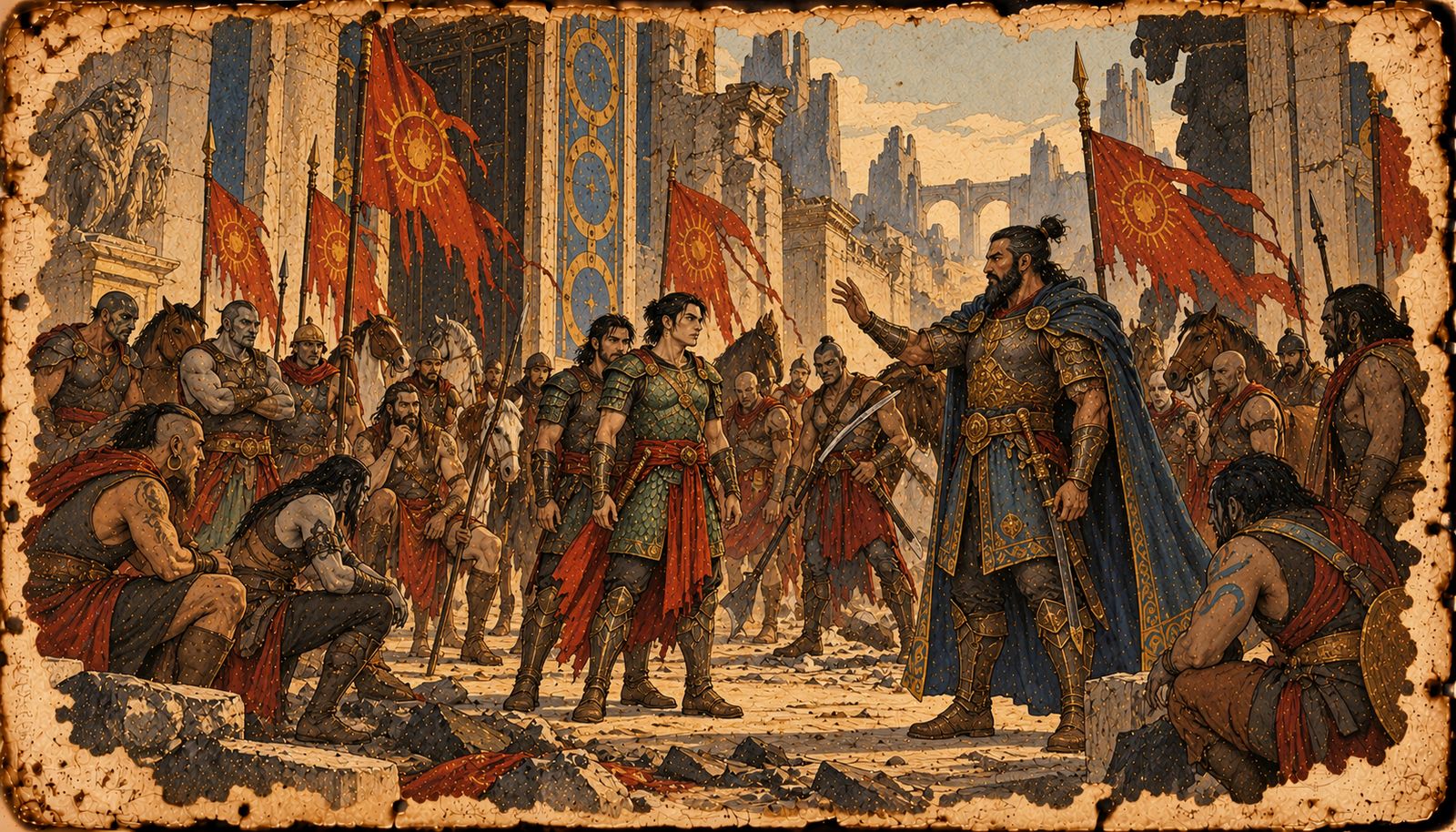
They all stood ready, waiting for Aahush at the fallen gates of the north. As promised, Aahush rode up to the expectant band of thirteen, the multicoloured, dressed-up baguls ready to rush after master Mskar. Aahush saw to their preparations and spoke to them of the important mission they were set on. To boost the band’s morale further he praised Uhan’s father and his bravery, and underlined the indomitability of Uhan. And as the culmination of his act, just before the departure, Aahush declared Uhan the leader of the twelve men who had once been his equals.
“Uhan beware you are to enter the Aranya Forest. Sly Mskar is at large in that forest, which he will use to his advantage. Look for Kimmara, it might help,” saying that, he bade them away.
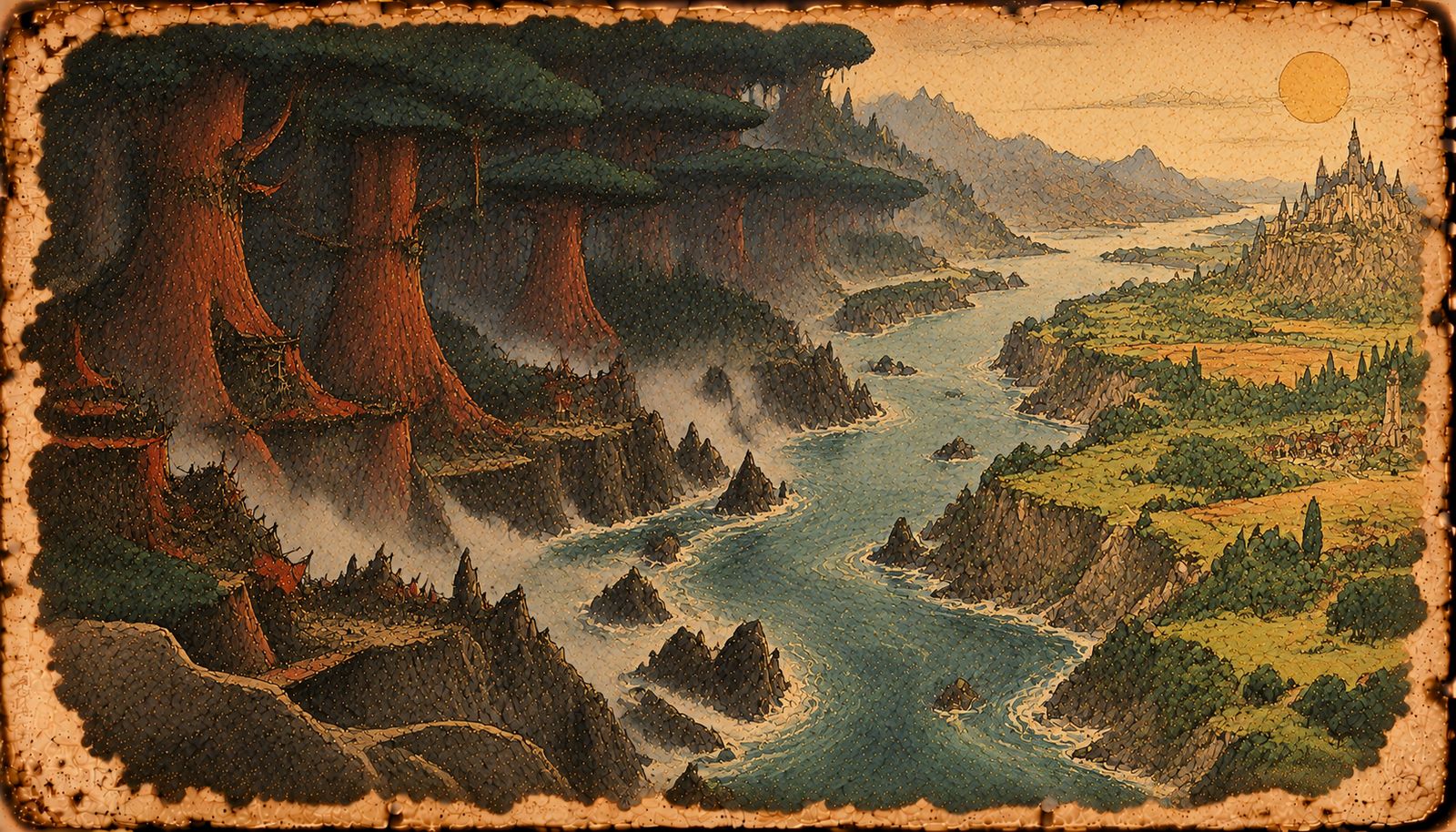
Uhan rode with his men towards Aranya, the dreaded living forest. Men is the wrong word to describe his horde. These were savages from Aahush’s army: raised, or rather reared and bred, in the lands of Valkan, and trained in the special units of its capital, Koaw Kaas, a place for no normal being. It seemed that Valkan had been carved out of evil itself. The only thing that reached there unhindered was sunlight, which to a large extent kept its horrific tenants under control. Of the various beings that lived in Valkan, there were two strong clans, the Kalamaurs and the Narvriks. They controlled the region from the River Hanub, the frontier closest to the peaceful part of Praleesi, to the snow-clad, dry, arid Lhashka.
Lhashka and beyond was where the horrendous sisterhood of Chudels roamed, in their cursed living. Both clans, the Narvriks and the Kalamaurs, could not bear or handle sunlight, given their curse. The Great Ndra’s curse, which had transformed them, made their blood react corrosively to sunlight. This led to haemorrhages with excruciating pain, at times permanent physical damage depending on how long the exposure was, and if exposed long enough, a tormenting death.
To protect themselves against the sunlight, these creatures had promoted the growth of a species of tree, gigantus monstera. As the name says, these red-barked trees grew to extreme heights, with short, thick leaves and long, scaled branches; hence the name monstera. Growing close to each other, competing for sunlight, the trees created a blanket-like canopy that kept sunlight from the ground. This created a unique, sunless, gloaming world for the dwellers of Valkan.
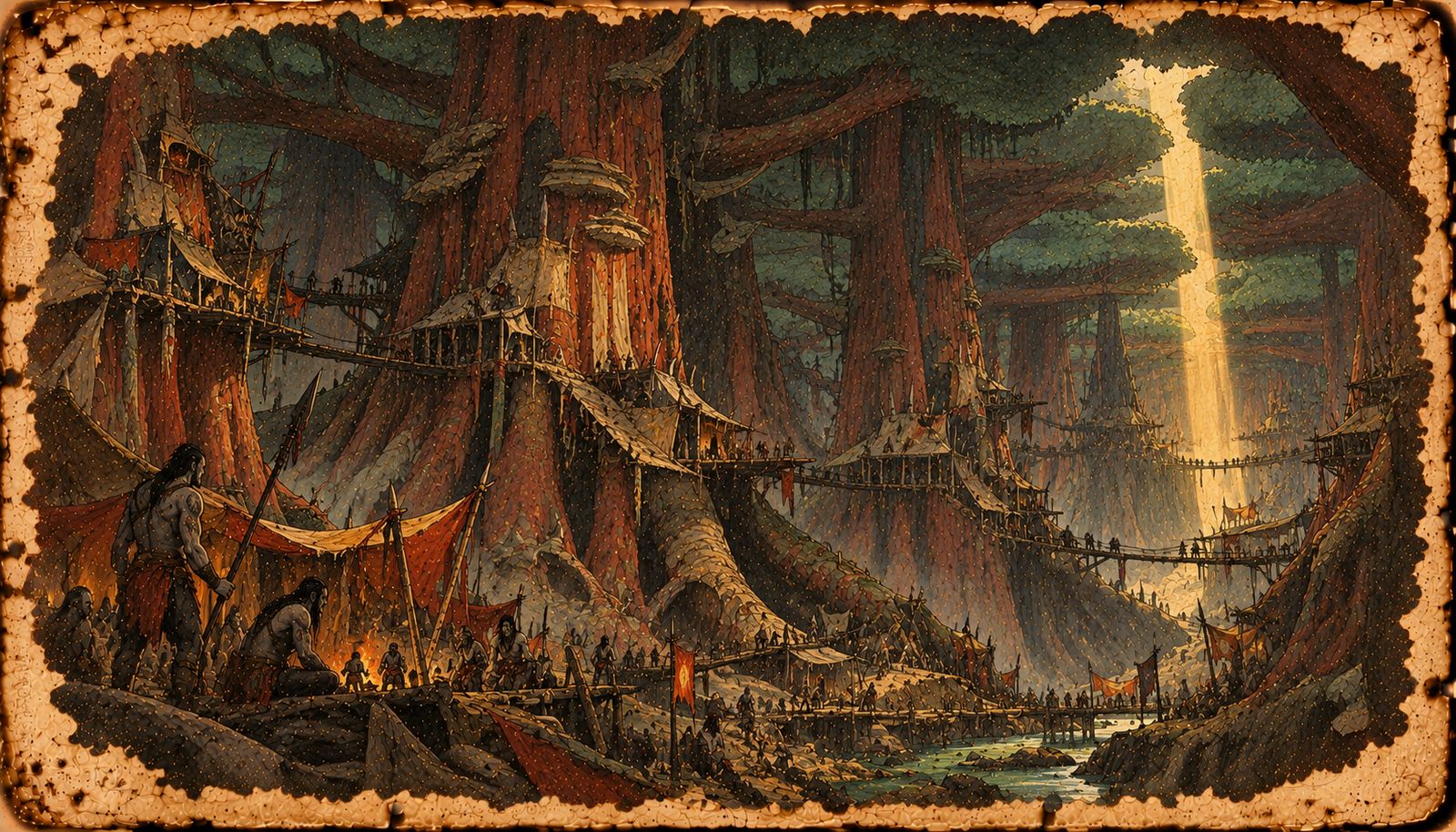
Escaping Valkan was no easy task for these creatures, for the curse laid by Ndra never allowed them to cross the River Hanub. With his death the curse had begun to weaken and leaving Valkan was getting easier, but escape from their hideous forms, escape from the sun’s effect, was nowhere in sight. When they first attacked Praleesi, they risked crossing the Hanub. Mahishi, the mastress of dark creation, lent a helping hand: despite her limited power on Praleesi, she created a temporary way across the Hanub for the baguls. Had they failed in their attack on Olam Anvyra, the baguls would have been annihilated. There were no gigantus monstera trees in the rest of Praleesi to protect the cursed ones, so for these creatures to form an army for Aahush and Ritr, the baguls needed protection all over Praleesi. In her last fight with Ndra, aeons ago, she had created an ardent servant of turpitude named Tzeel Tzur. This formless, cruel, sludgy being was powerful enough to destroy all, but Mahishi always kept it well contained. Tzeel Tzur had helped Mahishi destroy two other worlds in the unknown part of the world, but Ndra’s Praleesi was not like any other world. Here a mere Tzeel Tzur could not bring about destruction at will. On Praleesi, where Ndra ruled, mother Mahishi was careful. She began her work there by gifting Tzeel Tzur to the union of the Narvrik and Kalamaur clans, and so ensured she had her most trusted eyes on those hideous creatures. Tzeel Tzur created carriers for the creatures of Valkan. These carriers were human-like bodies into which the creatures stuffed themselves; the stuffed bodies at times bulged like vegetables packed in a sack. Tzeel Tzur even trained these unorganised wild savages to work as a unit, as a single army, using their hatred for Ndra and their loyalty to their clans.
Uhan was leading one such pack of savages, loyal to Aahush, brooding with hatred for Ndra and all that he had created. Uhan took his master’s words of caution seriously. He wondered why his master had mentioned Kimmara, the myth, seen by none, heard by none.
On their horses they galloped towards the Aranya Forest, eating up miles of land from the fallen northern gates of the capital, Olam Anvyra, to the edges of the doomed forest. Aranya had its own fame: the living forest of Praleesi, feared by cowards and even more so by the brave, a forest that hosted all that one could fear, from animals to otherworldly creatures. The forest was home to a myriad of animals, plants and trees, and even beings never seen in any other part of Praleesi.
Old wives’ tales were the only living memories the rest of Praleesi had of the enchanting forest. It was so feared that none set foot in it, not even to test the tales, which claimed the forest had been created by the ever-wandering souls, The Children, and was protected by the beings who lived in it, beings never seen, never heard of. The forest had never been inhabited by human forms, or by the animals found throughout the rest of Praleesi. The only things that came out of it were scary legends and stories of horror. Worst of all was the image of Aranya’s protector, called Kimmara. Of what it was, where, or why, nothing was ever known; only stories about it made the rounds, in myths, in legends, and in all the stories ever told to children to keep them away from the forest.
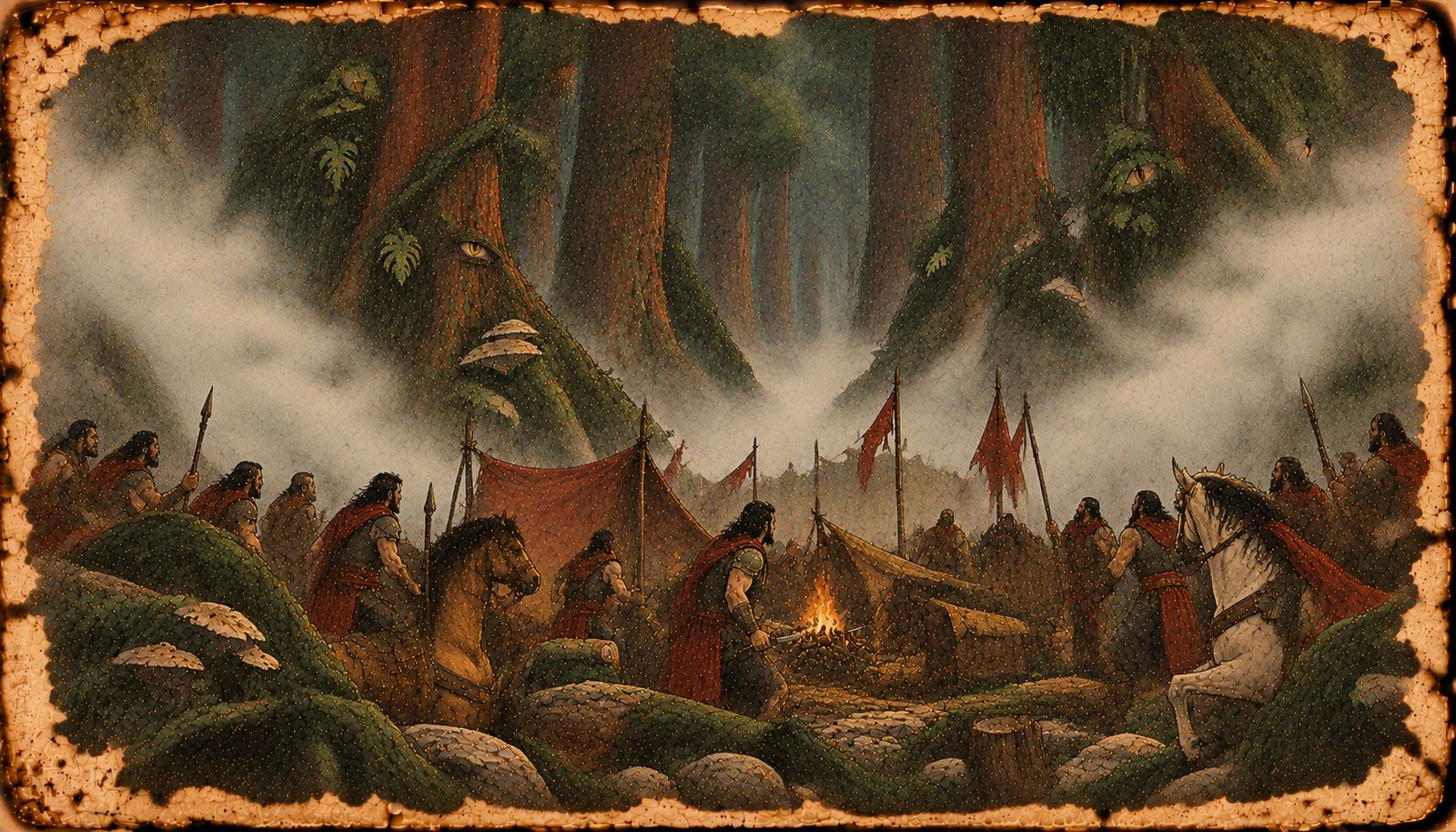
Uhan and his men stood at the edge of the eerie forest, feeling its fresh, cold breeze. The trees moved with the wind, branches brushing against each other, creaking and at times croaking, adding to the sinister impression of the forest. The gushing of the wind playing with the leaves was audible even from a distance, creating the image of a monstrous giant breathing heavily in its sleep, waiting to be woken.
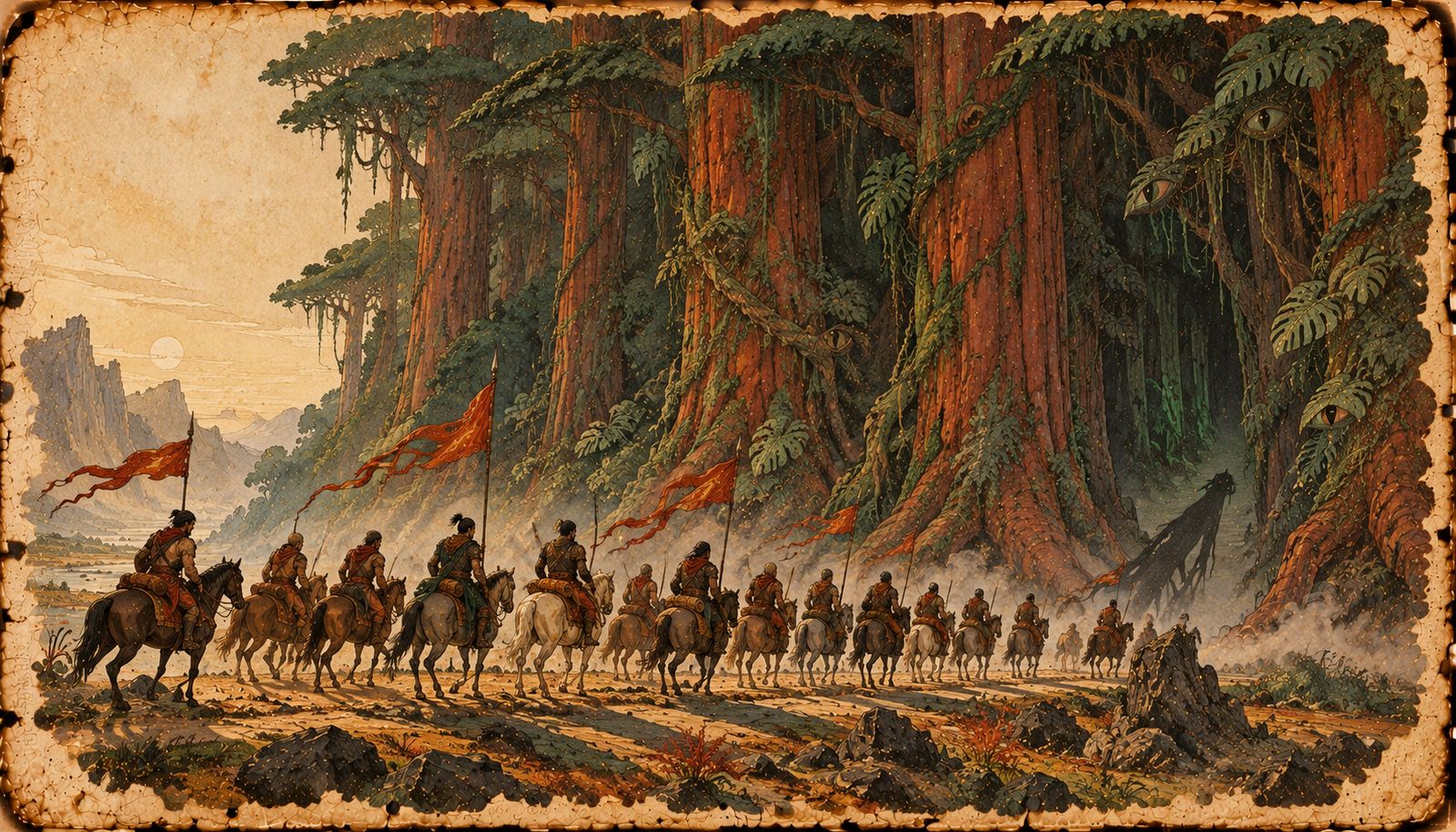
The fast-moving, playful wind carried an odd smell from the forest as it fluttered their dark orangish flags, and their clothes swayed with it too.
They all stood there waiting for their new captain’s orders, while Uhan’s gaze was fixed on the forest as if it were about to attack them. After a cautious study, he signalled with his left hand to march ahead and rode in first; the rest followed him. The forest was thicker than they had perceived. Trees touching the skies, covered with moving creepers that had eyes, were enough to set in the fear. With no knowledge of where Mskar could be, they moved ahead; one could sooner find teeth on a hen than Mskar in Aranya. Uhan knew he had wounded Mskar, so it was doubtful he had gone far, but he was concerned about the mechanical machine, the lifeless metal bird on which Mskar had sprung away. He was counting on Mskar’s deep, lacerated wound. His blade had made a good deep cut on Mskar’s right thigh, which had made Mskar resort to the lifeless bird to jump over. The search party was deep enough now, far into Aranya, away from the outer edge of the forest. Time had flown by, as though time had a different pace in this forest. The band was occupied just observing the weird forest, nothing like what they had seen or imagined. While the baguls were engrossed in their bizarre surroundings, Uhan was focused on his hunt. He still had a clear, live picture of master Mskar in his eyes: how he had attacked him with the sword, how Mskar dodged the first two blows, but the third was far too fast for him to slip, and he was struck.

The whole scene played out before his eyes as they cautiously proceeded. It had been half a day since they entered the forest, heading on with just some hope of nabbing Mskar. Heading nowhere was making the savages restless, but Uhan was calm, lost in thought, as though trying to smell out Mskar with his thoughts. As he pondered, he tried to recollect the myths and rumours of Kimmara.
So deep was he in thought that he said ‘Kimmara’ aloud. That made his troupe halt, but he did not notice it. His horse walked on while its master was lost in his thoughts. Ujoy called out to him, which brought him back from his trail of thought.
“What happened?” Uhan asked, turning back.
“Captain you spoke, ‘Kimmara’,” Ujoy replied.
“Oh, did I?” Uhan said, confused. “Do you know him?” he questioned.
“Like others we too have heard stories of him … er! Her! It?” Raksen said, confused, as he looked at the others with hope-laden eyes for clarification.
“Hmm! And what do these stories say?” said Uhan.
Araksha, the eldest in the band, spoke: “Commander, there are many legends about Kimmara, we might spend our days discussing them, but yet would not be able to figure out what is what,” and he strode towards Uhan. “But of many there is one legend which lives on and can certify that Kimmara exist.”
“Tell me,” said Uhan.
“During the times of creation, Kimmara was created to protect Aranya. It neither male nor female of its species was not bound to passion of any sort, had no attachments no loyalties to anyone except Aranya. As guard Kimmara never allowed anyone to enter Aranya, until Mskar crossed in breaking his absolute authority. That was when Mskar was commissioned to make the Aja for Ndra. Mskar needed waters from meandering Bahina River.”
“Kimmara is desire, it comes to you as you desire.”
Raksen’s great-grandfather, as Raksen tells it
Araksha was interrupted by a loud screech from some animal, which startled them all and scared a few. The horses had already become restless, and so had their masters. Seeing the group, the animal paused, then went on its way. Its weird form, a furless quadruped uglier than a pig, with big pink eyes and a snouted mouth filled with rows of teeth, attested that they were in Aranya.
“So where is Kimmara then? We too are here,” Uhan questioned, trying to distract his men from their fear of Aranya after that animal.
“Captain, for his needs, Mskar entered the forest so says the legend. But Mskar being the master of his art, Kimmara could not notice the entry until Mskar got what he wanted. Once he discovered Mskar in forest, Kimmara was enraged, engulfed with fury he attacked Mskar viciously, who fought back. They say Mskar using this forest defeated Kimmara, hurt his ego. Mskar left the forest with no trace, and left behind Kimmara ridden with defeat and humiliation. Disgusted with self, they say Kimmara since then has lost his full grip on Aranya. Hence may be we are still unnoticed.”
“Hmm, so Mskar caused great humiliation to Kimmara,” said Uhan, caressing his imaginary beard.
“It’s only but a legend,” said Araksha, dismissing his own story.
“Well even if it is a mere legend, we need to try it, we need this Kimmara, and whatever it is,” said Uhan, looking to the others for ideas.
By then the rest too had accepted they were on a wild hunt. Each of them tried to contribute his share of the legends he had heard. Uhan was least interested in legends; all he wanted was Mskar. Each one shared the story: the same story, just a new version. The situation changed, the place changed, and so did the reason, but Kimmara’s defeat at the hands of Mskar was the common theme. Half a day had passed in the search, and another two hours in these stories. Soon darkness would engulf the already poorly lit forest. He had to ensure the safety of his men, provide food, and, most important, hunt down Mskar in this wild.
“Ujoy you and those two and find a place for us to rest for night and Kretu organize food. Rest we shall wait and plan the further action,” Uhan ordered his fellow baguls; that was what they called themselves. Bagul was the term they used for the beings of Valkan, whom Praleesi deemed savages. At once Ujoy and two baguls rode north into the mist until they vanished into it. Kretu went hunting for food with two other baguls. “Raksen, this Kimmara what do you know more about it, does there exist any truth to its existence,” Uhan asked Raksen, his loyal companion of years.
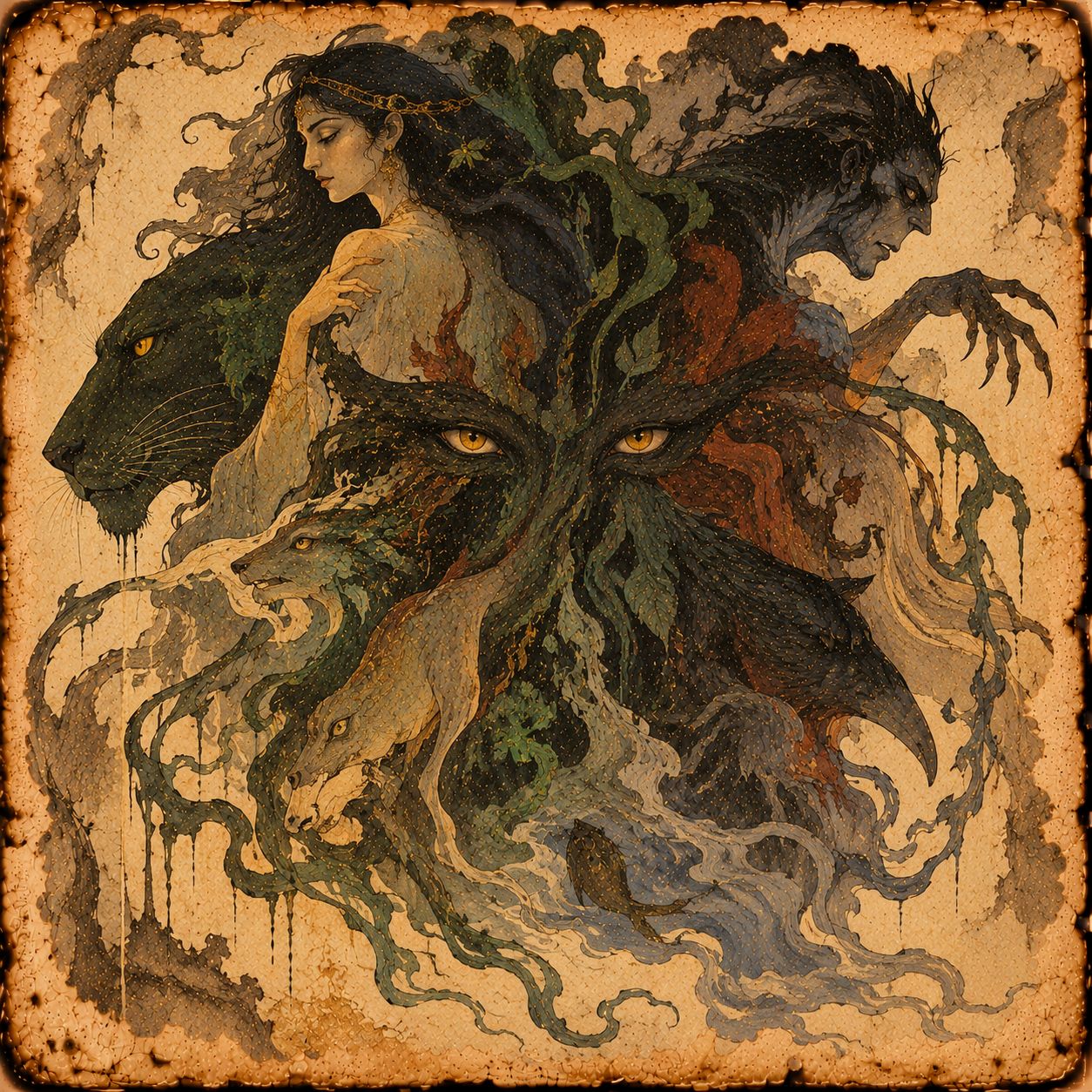
“Well! no one has seen it, so hard to tell what it is, some say it’s man, some say it’s women, some see it as animal others may see it as creature. But none of these categorize it as either male or female of any species. My great grandfather used to say Kimmara is desire, it comes to you as you desire. To some it may come as ravishing beauty, to some as horrid opponent, some may see their worst fear in it, while some see extreme joy in it. There is no single opinion about it, as after all it’s legend, a myth,” Raksen replied, trying to be honest.
“Curious, what is it, and how do we find it,” said Uhan, as he brushed his chin.
“Ahem!” Dhruket cleared his throat. “Uhan if this Kimmara’s existence holds any water, then as per legends he is bound to protect the forest. Even in his defeat, he will have to protect,” he said, and looked around to see how the rest reacted. All ears were his. “What I am saying is rather than we search for Kimmara or his existence, let’s bring him to us.”
“Yeah right call his name and he will came running like baby,” Raksen retorted, as the rest giggled.
A little unnerved, Dhruket said, “I ain’t no idiot, all I say let’s attack what he cares for – This Forest.” The giggles fell silent. All stared at him, and he stared back, then fixed his questioning gaze on Uhan.
“What do you mean, attack this forest!” the men questioned.
“It’s Kimmara who has to protect the Aranya, as per legends he was created for the sole reason, he is bound to protect it, so all we need is to create a scenario where we cause harm to attract attention. What say you Uhan!” Dhruket directed the question to Uhan.
“Hmm, well we have nothing to lose, do we?” asked Uhan.
“Even if Kimmara is legend, there are other things in Aranya which do exist, hope we do not cross path with them in doing so,” Kryiet said, afraid.
“Who cares!” Uhan laughed out. “Let’s rest first and then we decide our further course of action,” said Uhan.
“Over here!” They heard their rider call out, and all turned to see who it was. “Over here! we can set our tents there, just close to those mounds,” said the rider as he approached the group. “Kretu waits at the spot, while asked me to report to you,” he said.
“Ok you and another two bagul wait here for the food team, once they return bring them over.” Saying that, Uhan placed his foot in the stirrup and swung himself onto the horse. The rest followed, and they rode in Kretu’s direction.
While they waited for the others, a makeshift tent settlement was made ready. Their wait was for food, some game animal if possible; these savages gorged on flesh. One or two of them sat around a fire while another two or three kept watch. There was a lot to watch for, but for now the forest seemed to be silent. The noises, the screeches and howls, were gone; all one heard was the rustle of leaves. The wind whistled and brushed the tree branches, the only life they heard.
“Aaarrrrmm arm yourself!” they heard a shout from the distance. At once they all moved out of their tents to see what had happened.
“Prepare for attack,” shouted a wounded Kretu riding in on a horse, now visible to the rest from the tents.
At once all took their positions and prepared for the attack. Kretu, riddled with arrows that looked like twigs, rode in struggling to keep his horse on the leash. The twigs seemed to be alive; they kept drilling into his body as he reached the camp. Two other soldiers helped him dismount, but were horrified by those living twigs.
In pain he said, “It suddenly attacked us, they are killed, they are killed, I… I… aaah.” His pain kept multiplying when the others tried to pull the twigs out; they drilled in further, spilling more thick, whitish blood.
“I… I… Don’t know what was it is! Shiamack shot a deer like animal and… aaah!” he exclaimed in pain. “And suddenly from nowhere we were attacked. Water! water! Some water.”
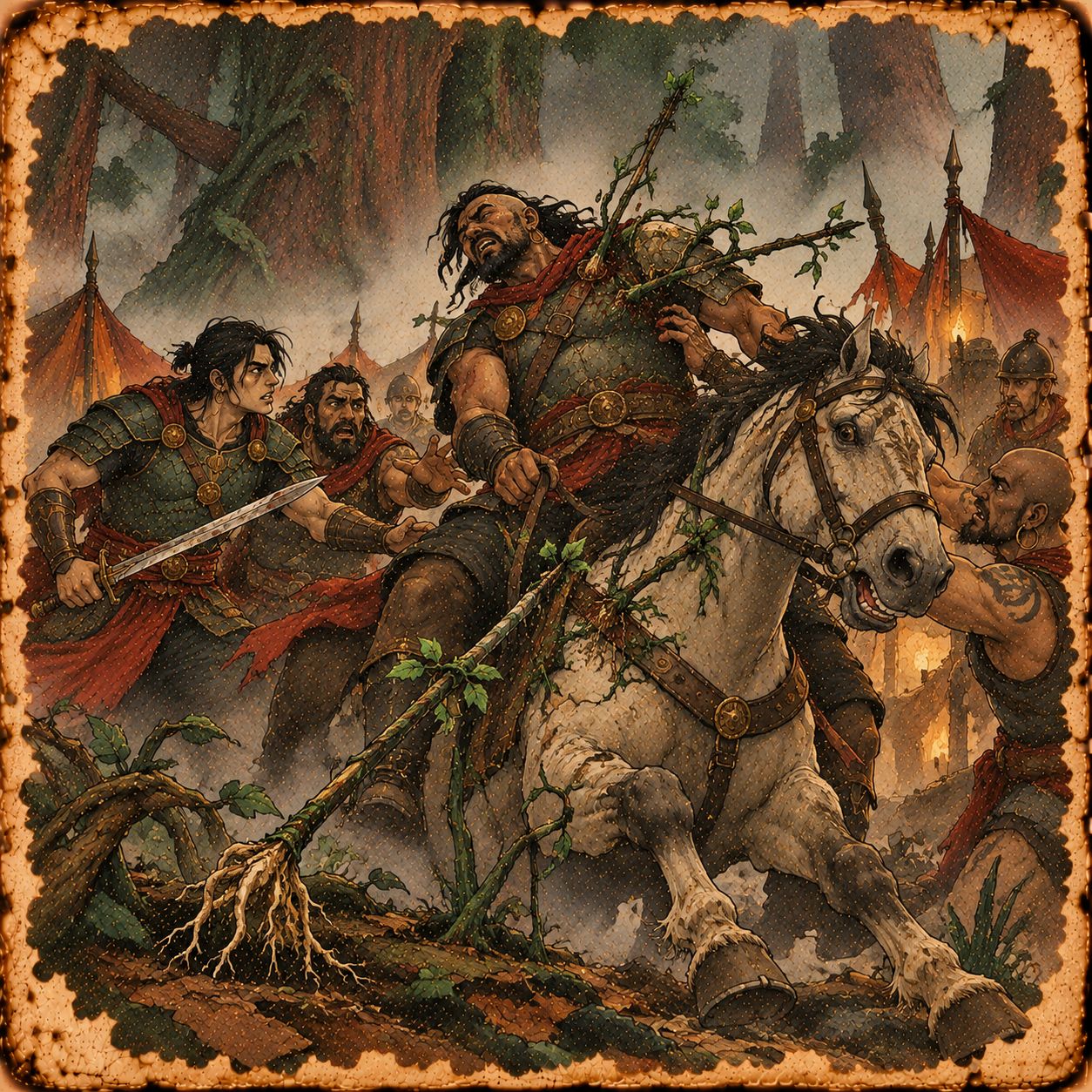
“Who was it, who attacked you?” Uhan asked, angered by the attack, gripping his iron sword.
“Dooont Knooow,” Kretu said with difficulty. “They were just was not visible, hidden in mist they showered these on us, also they attacked us individually. We were no match,” and he paused for breath.
“How many were they?” Uhan questioned.
“Don’t know, it was too sudden, an ambush in thick fog, may be they were three four or just one too fast and agile, they slashed open…” His sentence was cut short by a loud warning call: “P O S I T I O N S.” They all looked around; one of their baguls had given the warning call. At once they took their positions.