The scientist gets a long rope; the Jyotishi gets a short one. Why we measure them with two different yardsticks.
AuthorDagadu D
Written2020
Reading7 min
Written in 2020, in the early months of the Corona pandemic.
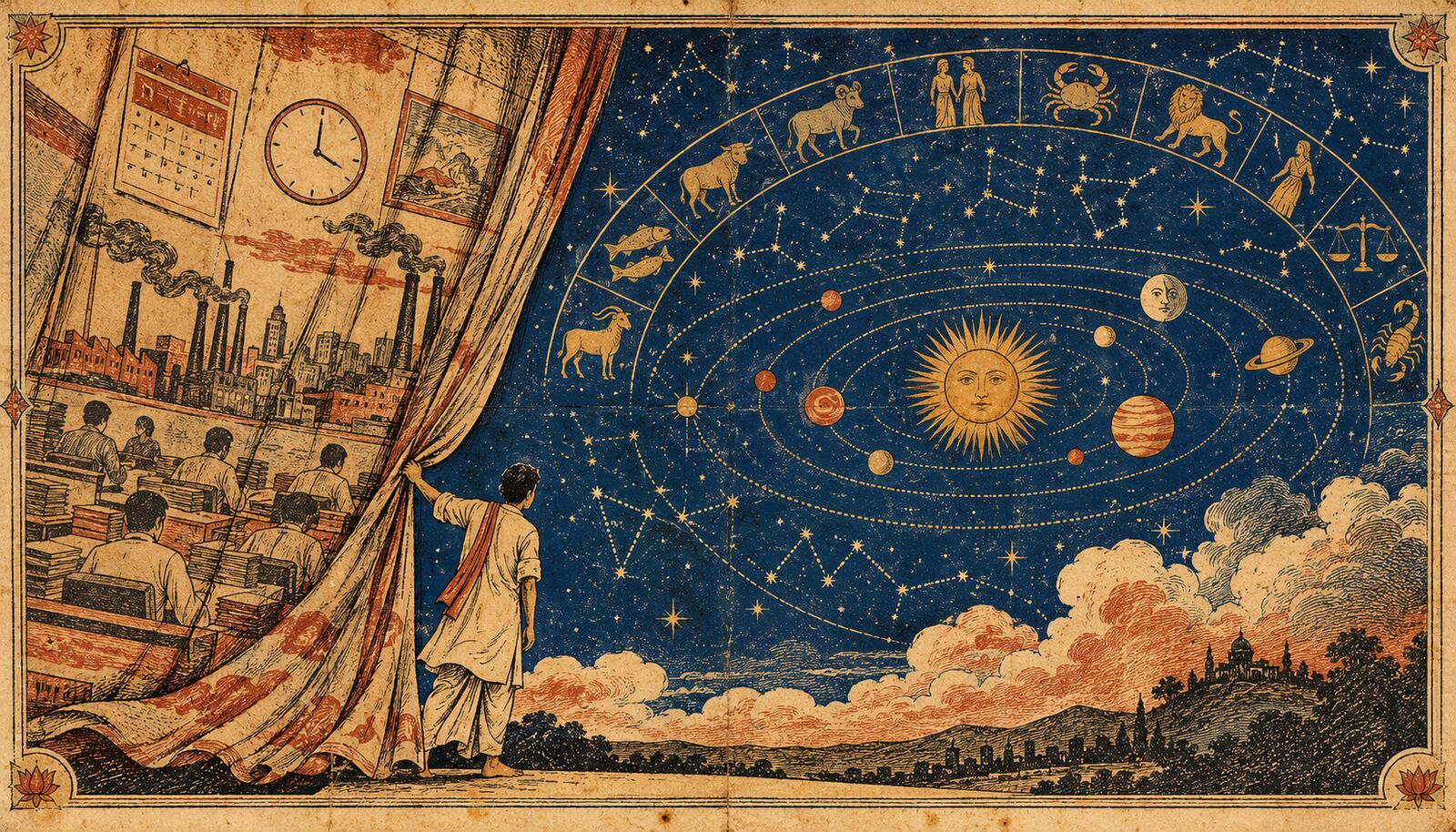
Behind the curtain of clocks, calendars and clerks, the sky they were all measured from.
As long as the veil of the unknown covers our eyes, everything is illusion. Science works on data, and data helps lift the veils to expose the science behind things. As a generation, we have grown up on an education built on this scientific process. What we forget is that this education is not designed to create thinkers. It creates batches of workers: clerks to process the data on which industrial revolutions are built.
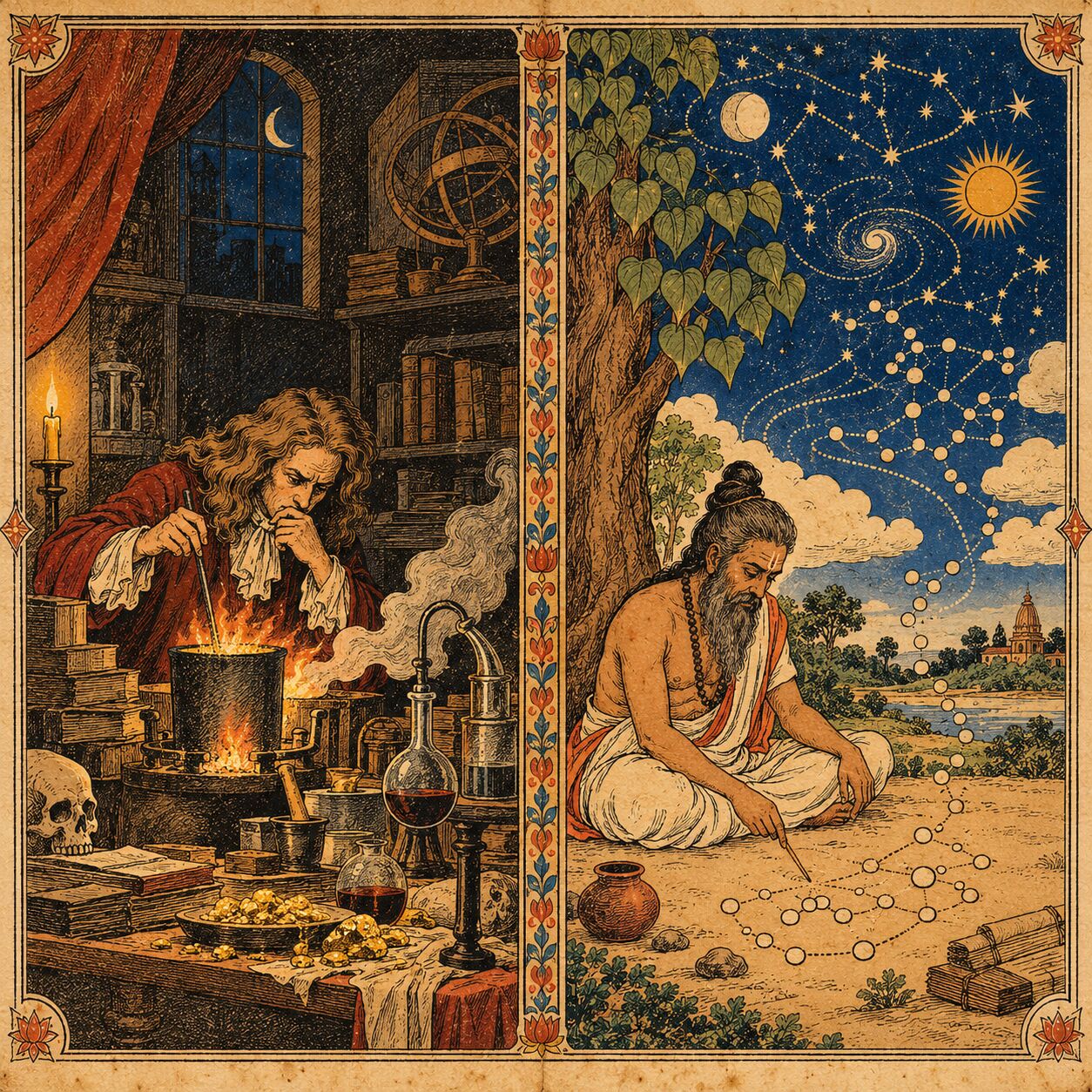
With our somewhat brainwashed selves, this is how we approach most things. We try to alchemise everything into gold. Even the great Newton spent years on alchemy, trying to produce gold. He who understood the nature of physics, he who documented the mysteries of the forces of this universe, spent time exploring alchemy, though in secrecy. Like him, you will find many others who tried the same and failed utterly. In contrast, we have no such individual, famous or otherwise, from the ancient Indian subcontinent who wasted his focus on alchemy. The reason is simple: our schools of philosophy had already found the answers. We had Rishis like Kanaad, who solved the riddle of atoms long ago and simply described it in philosophical quartets. As a civilisation, we had already understood that matter cannot be converted, but energy can be transformed from one form to another. Our ancient seers had long understood the basics: Aryabhata taught that the Earth spins on its own axis, and nobody here doubted that the planets are spherical. We did not have to wait for Galileo to make us understand.
One chased gold in secret; the other had already let it go.
Two yardsticksScientist's yardstick Jyotishi's
But with time we lost that. We embraced simpler ways of science and left behind the complexities of philosophical methods. We have even forgotten that the concepts of years, months, weeks, days and hours are all deeply rooted in Jyotish (astronomy goes hand in hand with it). As a matter of fact, isn’t the start of the year on 1 January itself an illusion? A year and a 24-hour day both have specific definitions based on the motions of the Earth. But in the 3D space of the universe, where is the starting point from which we count the Earth’s rotations? Where is up, and what is down? Why is north north, or south south? How are these things fixed? Despite these uncertainties, our GPS works precisely, we have atomic clocks, satellites circle the Earth, reaching Mars has become possible, and we as a human race have landed on the Moon. All this is possible because of the openness of science, whose roots lie in astrology, or which at least owes to astrology (I am deliberately not saying Jyotish here) a good part of how far it has come.
Openness is a must for a scientific mind. But how open is modern science to Jyotish? Let us stick to the example of Corona. When it arrived on the world stage, it bruised the egos of the practitioners of science. Though none knew what it was, everyone threw in an opinion. When a scientist said something and we accepted it, even if it later proved wrong, we gave them leeway, thinking this was a developing situation. The same leeway is not allowed to a Jyotishi. There we expect an absolute answer. A Jyotishi is not allowed to make a mistake, but learned scientists are allowed to present any theory as fact, and we accept it (to a certain extent). In the past three or four months we have seen how the facts on the Corona front keep changing. Like any astrologer (and I include those outside India), the scientists have been throwing data at us: about the virus, about the vaccine, and about how we mere mortals should handle it.
Leeway for one
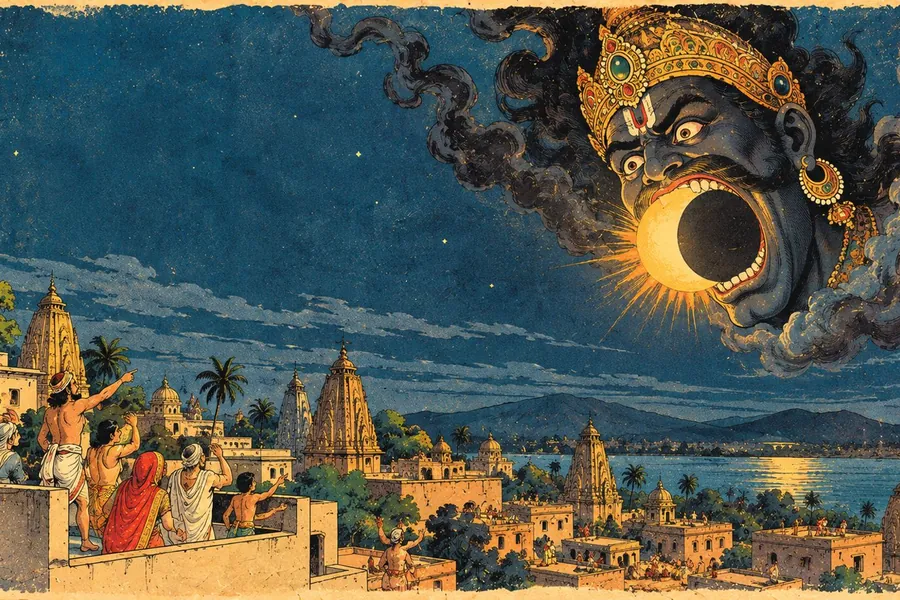
What one can observe is that scientists are held accountable for their mistakes, but accountability is absent in the field of astrology. Not a single astrologer gets challenged. Every astrologer blamed the ill-famed eclipse of December 2019 as the root cause of the coronavirus. If astrology is predictive, why did this horde of future-predictors fail to predict the event? Why are the predictions made in retrospect, after the event has occurred? In this age of YouTube there are tonnes of astrologers doling out predictions for every event. But have we wondered whether these self-declared astrologers are worth anything? Just because they proclaim to know this science of prediction, do they possess real knowledge? Why do we believe that any Tom, Dick and Harry who throws some astrological jargon at us is an expert? We doubt the scientists when it comes to Corona, so why do we accept any astrologer? Data or not, our understanding of the word ‘astrologer’ matters too. How well-tuned our minds are, and how open we are, is what matters.
Do we treat them the same, or do we use different yardsticks?Dagadu D
The scientist gets a long rope; the Jyotishi gets a short one.
The scientist
The Jyotishi
When wrong
Given leeway: “a developing situation”
Expected to give an absolute answer
Held to account
Yes, for every mistake
Never challenged, even in hindsight
What we know of it
We all studied it in school
Still behind a halo of taboo
Egos
Many claimed final authority, and fell
Often larger than the science itself
The two yardsticks, as this article sees them.
Knowledge held close
Astrological conferences take place all around the world, where people (not only practising Jyotishis) present their research on this science. Some have studied and applied the classical dictums for years, and present their data in debates within their communities. Outside the astrology world, very few people know of these conferences. Their proceedings are rarely circulated, not out of secrecy but because of a lack of interest from the audience at large. One thing is certain: for many centuries this knowledge was held close to the chest by a few. There were various reasons for this, a few acceptable, a few laughable. But it did harm this divine science and its spread. Just as the knowledge of the Vedas was held captive for long, so was the knowledge of astrology. In the last century, thanks to the hard work of a few selfless Jyotishis, the knowledge became accessible. What was once only for a chosen few came out into the open. Magazines and schools were established to promote it. A lot has been done, but a lot remains.
We also need the active participation of the public. By and large, people avoid learning this science only because it is still considered not meant for commoners; it still has a halo of taboo around it. Think of the days when the British forced their education on India and Indians avoided it, or when girls weren’t sent to school because education was not considered meant for girls. That charade has long been shattered. Yes, it took time; it needed time. The same goes for astrology. It needs to be accessible to people. They have to study it, learn its pitfalls and understand its challenges. We all studied science in school, but not all of us work in those fields. As part of growing up we faced physics, boring biology and confusing chemistry. We have first-hand experience of them, so we understand, or at least have empathy for, their practitioners. We know why it is hard for them to reach conclusions, and how hard. We need exactly the same experience with astrology.
Just as people form their opinions about science after studying it in school, the same yardstick should apply to Jyotish. Let people study it and understand the nitty-gritty of how astrology works. It will make them realise why so many of the people who make predictions are fundamentally wrong.
Egos on both sides
As in any other field, egos play an important role here too. Most of the time these bloated egos grow larger than the science they practise. This goes for the scientists handling Corona too. Many came forward as the final authority on it, and fell flat on their faces. Corona, the old virus, has brought the Earth to a grinding halt, exposed our fault lines, divided nations and pitted immunologists against virologists. We have all been hurled into a dark room with no door. In such a scenario, why should astrology be the exception?
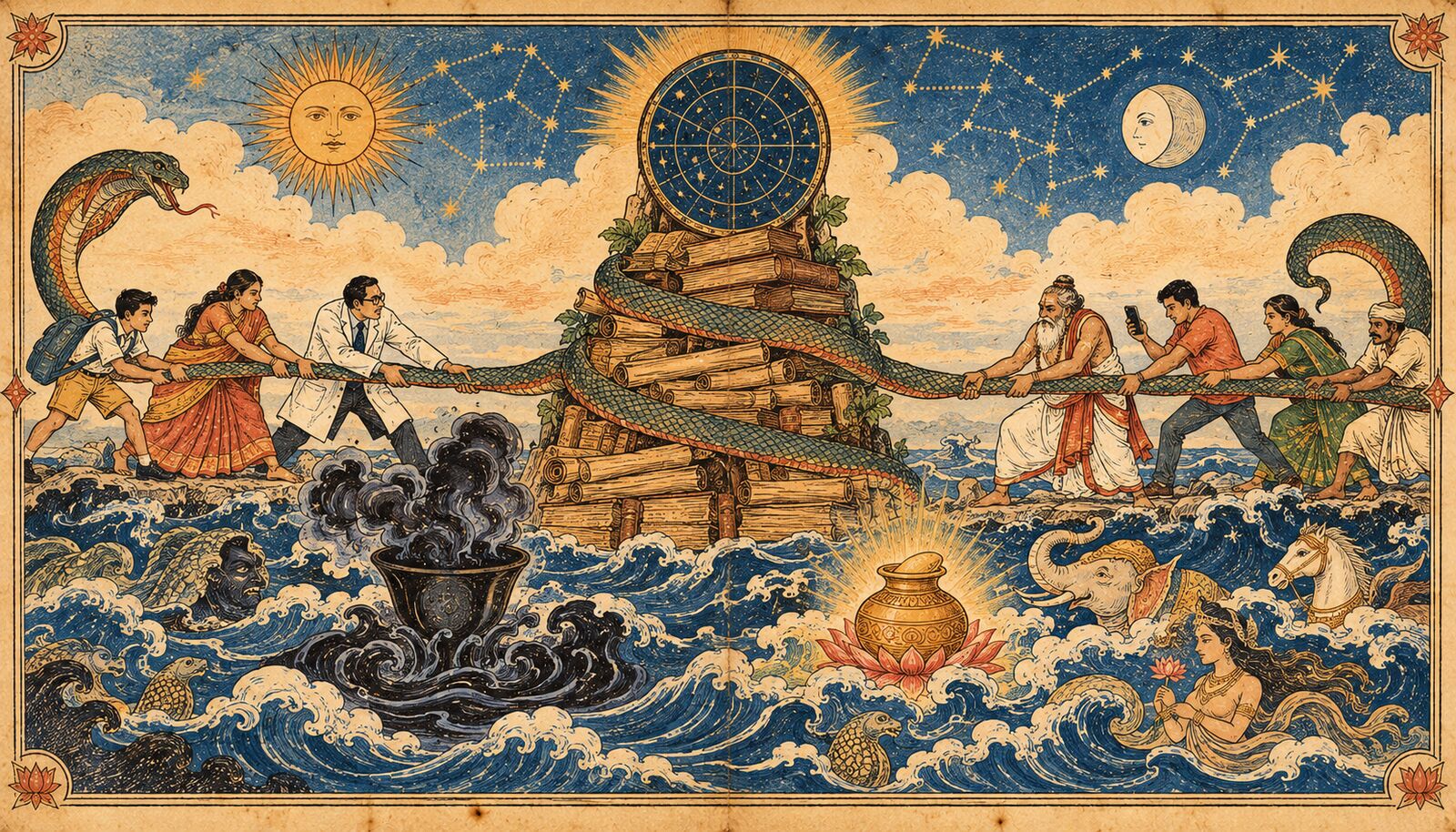
Only a churning separates the poison from the nectar.
There has to be a churning; only then do the poison and the nectar separate. Likewise, astrology needs churning. It needs people to take part in it and debate over it. Sitting on the fence will only harm it.
To accept it or to reject it, one first has to try it.